

There’s something appealing about the idea of making fresh juice at home. A handful of fruit, a few vegetables, and within minutes, you’ve got something fresh, full of flavour, and made exactly how you like it.
The reality, however, isn’t always quite so convenient.
Traditional juicers can turn a relatively simple task into a surprisingly involved process. There’s the chopping, the constant feeding of ingredients, the pulp collecting in awkward places, and then the inevitable cleaning afterwards.
It’s often enough to turn an appliance that initially seemed like a brilliant investment into something that spends most of its life gathering dust in a kitchen cupboard.
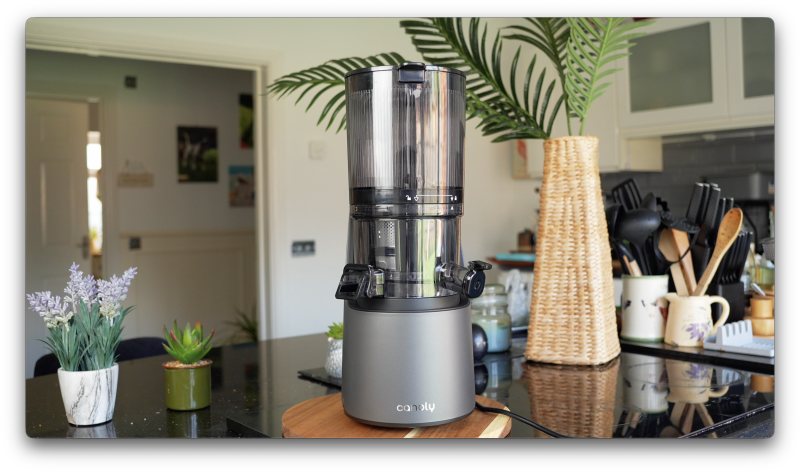
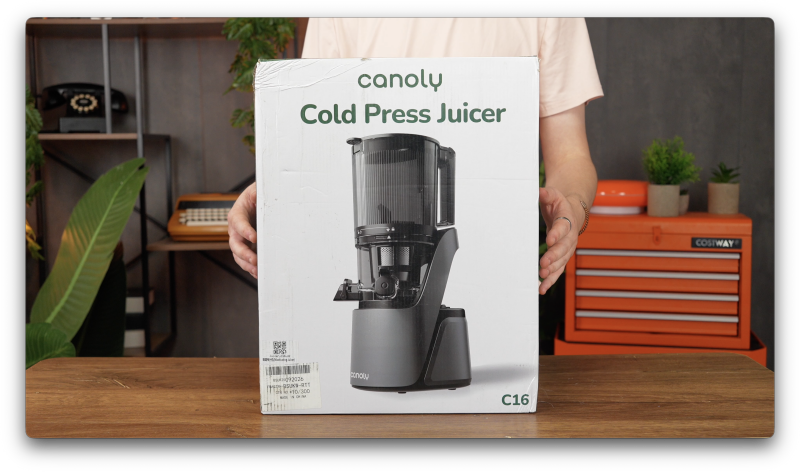
The Canoly C16 3-in-1 Cold Press Juicer attempts to solve some of those frustrations.
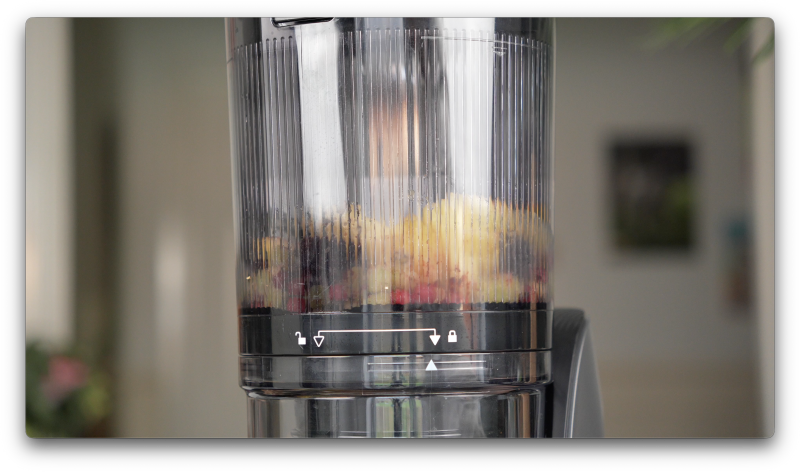
Rather than relying on a narrow feeding chute that requires ingredients to be chopped into small pieces, the C16 features an enormous 2.6-litre hopper with a six-inch opening. The idea is simple: load your ingredients, close the lid, and allow the machine to gradually process everything with minimal intervention.
But Canoly has gone a little further.
The C16 isn’t exclusively designed for making juice. With its interchangeable filter system, it can also prepare plant-based milk and frozen fruit sorbet, potentially replacing the need for several separate kitchen appliances.
It’s an interesting combination, particularly for anyone trying to make fresh food preparation a more regular part of their routine.
After spending time testing all three functions, from everyday fruit and vegetable juices to homemade plant milk and frozen desserts, the C16 has proved to be a surprisingly versatile machine.
However, while there’s plenty to appreciate, there are also a few practical considerations worth understanding before giving it a permanent place on your kitchen worktop.
Quick Summary — Is the Canoly C16 Worth It?
The Canoly C16 is a capable, impressively quiet cold-press juicer that makes everyday juicing considerably more convenient, primarily thanks to its enormous self-feeding hopper.
Its ability to process larger ingredients with less preparation is arguably its greatest strength. Instead of constantly chopping and feeding fruit into a narrow opening, you can prepare a batch, load the hopper, and allow the machine to do much of the work.
The slow extraction process produces enjoyable, freshly pressed juice, while the additional plant milk and sorbet functions provide genuine versatility.
The simple controls and dishwasher-safe removable components are welcome additions, although cleaning still involves dismantling several pieces, and fibrous ingredients can occasionally require extra attention.
It’s also a relatively tall appliance, so kitchen storage is something to consider.
Overall, the C16 makes the most sense for people who regularly prepare fresh juice and genuinely intend to use its additional functions. If you’re only interested in making an occasional glass of orange juice, a simpler and potentially cheaper machine may be sufficient.
What’s in the Box?
The Canoly C16 arrives as a fairly substantial kitchen appliance, with several components that need assembling before its first use.
While the number of individual pieces might initially appear slightly intimidating, the assembly process becomes straightforward once you’re familiar with how everything fits together.
The supplied package includes:
- Canoly C16 motor unit — The main base housing the 250W brushless AC motor.
- 2.6-litre feeding hopper and lid — The large-capacity container designed to accommodate bigger ingredients.
- Pressing assembly and auger — The central mechanism responsible for crushing and pressing ingredients.
- Juice strainer — Used when preparing fresh fruit and vegetable juices, as well as plant-based milk.
- Sorbet strainer — An interchangeable filter designed for processing frozen fruit.
- Juice collection container — Collects the extracted liquid.
- Pulp collection container — Collects the separated fruit and vegetable solids.
- Removable pulp outlet components — Including the detachable section designed to make clearing trapped pulp easier.
- Cleaning brush — For maintaining the removable components.
- User manual and documentation — Covering assembly, operation, cleaning, and maintenance.
One important detail is that the three-in-one functionality doesn’t require three entirely separate processing systems.
Instead, the C16 uses interchangeable strainers, allowing the same basic appliance to handle different ingredients and produce different results.
This helps keep the overall design relatively straightforward, although you’ll still need somewhere to store the additional filter and collection containers when they’re not in use.

Design & Build Quality — A Modern Juicer With an Enormous Hopper
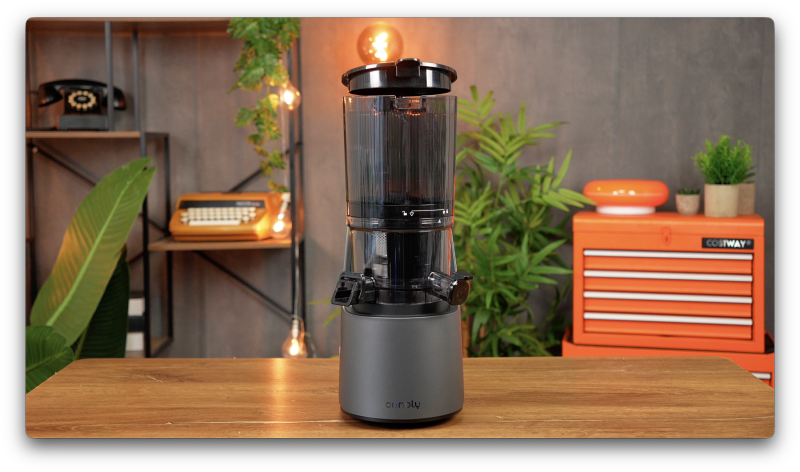
The Canoly C16 has a clean, contemporary appearance that should fit comfortably into most modern kitchens.
Available in Pearl White and Space Grey, it avoids the overly industrial appearance of some larger kitchen appliances.
The combination of smooth exterior surfaces, a relatively compact base, and a substantial transparent hopper gives it a modern, functional design.
Canoly lists polycarbonate and stainless steel among its construction materials, while the removable food-contact components are advertised as BPA-free.
The 2.6-Litre Hopper Is the Main Attraction
The first thing you notice about the C16 is the size of its feeding hopper.
At 2.6 litres, or approximately 90 fluid ounces, it’s considerably larger than the narrow feeding tubes found on many traditional juicers.
The opening measures approximately 150mm, or six inches, allowing larger pieces of fruit and vegetables to be loaded without extensive chopping.
Depending on their size, certain ingredients, including apples, can potentially be added whole.
This makes a meaningful difference to the preparation process.
With a conventional narrow-feed juicer, making a batch of juice often involves cutting everything into small pieces and gradually feeding them through the machine.
The C16 takes a different approach.
Its integrated cutting mechanism gradually prepares the ingredients before directing them towards the auger, reducing the amount of manual preparation required.
You still need to wash your ingredients and remove anything unsuitable for juicing, such as hard stones or inedible skins. Larger produce may also need cutting to fit safely inside the hopper.
Nevertheless, the ability to load a substantial quantity of ingredients at once makes the process feel considerably less demanding.
And that’s arguably more valuable in everyday use than another impressive-looking extraction statistic.
Compact Footprint, But Considerable Height
Despite the generous hopper, the C16 doesn’t occupy an excessive amount of horizontal worktop space.
Its listed dimensions are approximately:

Setup & First Impressions — Refreshingly Straightforward
Despite having several removable components, the C16 is relatively simple to assemble.
The hopper, pressing mechanism, strainer, and collection containers fit together in a logical arrangement.
Once you’ve assembled the machine a couple of times, the process becomes familiar.
Canoly promotes a simplified three-step assembly and disassembly system, and the overall design is clearly intended to avoid unnecessary complexity.
There’s no touchscreen, complicated menu system, or collection of automatic programmes to navigate.
Instead, operation is handled through straightforward controls.
You have the normal juicing function and a reverse function, which is particularly useful if ingredients become caught around the pressing mechanism.
It’s a sensible approach.
For an appliance that performs a relatively mechanical task, simplicity is often preferable to additional features that don’t meaningfully improve the experience.
How Does the Cold-Press System Work?
The C16 uses a slow masticating extraction system rather than the high-speed spinning mechanism found in centrifugal juicers.
A centrifugal machine typically relies on a rapidly rotating blade and filter to break down ingredients and separate the juice.
The Canoly C16 operates differently.
Its auger rotates at approximately 45–47 revolutions per minute, gradually crushing and pressing ingredients to extract liquid.
Power comes from a 250W brushless AC motor.
Canoly claims that this slower process helps improve juice extraction while limiting heat generation and oxidation.
Although slow juicing can offer practical advantages in terms of noise, foam, and extraction characteristics, it’s worth remembering that nutritional differences between juicing methods depend on the ingredients, preparation, and storage conditions.
A slower motor doesn’t automatically guarantee that every juice will contain more vitamins or nutrients.
Canoly also advertises a juice extraction rate of up to 99.6%.
That’s an impressive headline figure, but one that deserves some context.
Juice yield varies considerably depending on the fruit or vegetable, its ripeness, moisture content, and how the machine processes it.
A particularly juicy orange behaves very differently from a fibrous stalk of celery.
The 99.6% figure is therefore best understood as a manufacturer claim rather than a result buyers should expect from every ingredient.
Fortunately, the C16 doesn’t need to achieve that exact number to demonstrate its usefulness.
The more important question is whether it produces good juice without making the process unnecessarily complicated.
And in everyday testing, that’s where it performs particularly well.
Features & Performance — How Good Is the Canoly C16?
1. Cold-Press Juicing — The Feature That Matters Most
Although the C16 offers three different functions, conventional juicing remains its primary purpose.
And this is where the large hopper makes the biggest difference.
Preparing a batch of fruit and vegetables is noticeably more convenient when you don’t need to cut everything into tiny pieces.
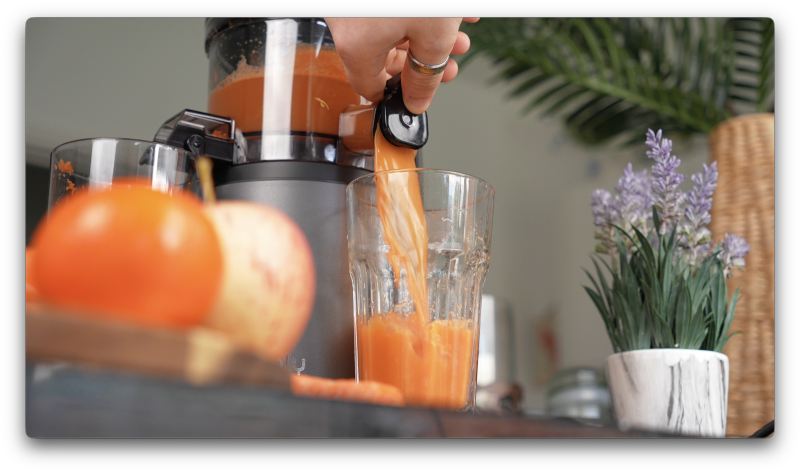
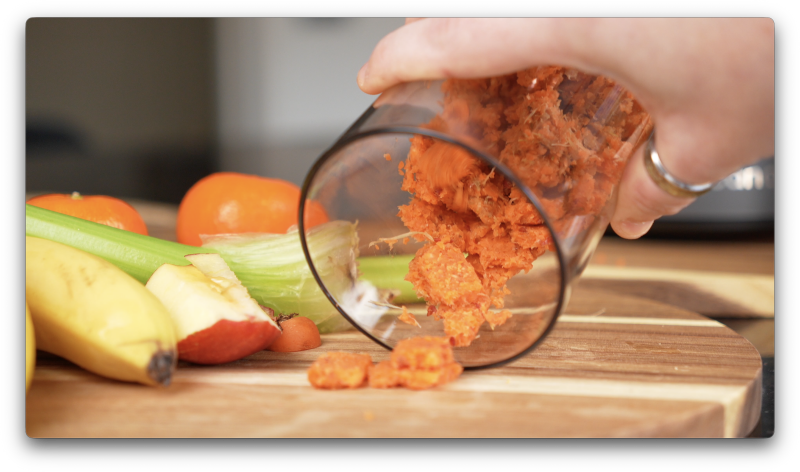
Apples, oranges, carrots, and other everyday ingredients can be prepared, placed inside the hopper, and processed gradually.
Once switched on, the machine begins working through the ingredients, feeding them towards the auger.
The result is a process that requires considerably less constant attention than a traditional narrow-feed juicer.
It’s not completely hands-off in every situation, and certain ingredients may still require intervention, but the difference in preparation and feeding is substantial.
Juice Quality
In testing, the C16 produced consistently enjoyable fresh fruit and vegetable juices.
The finished drinks had the characteristic texture associated with slow-pressed juice, with a slightly fuller consistency than some high-speed alternatives.
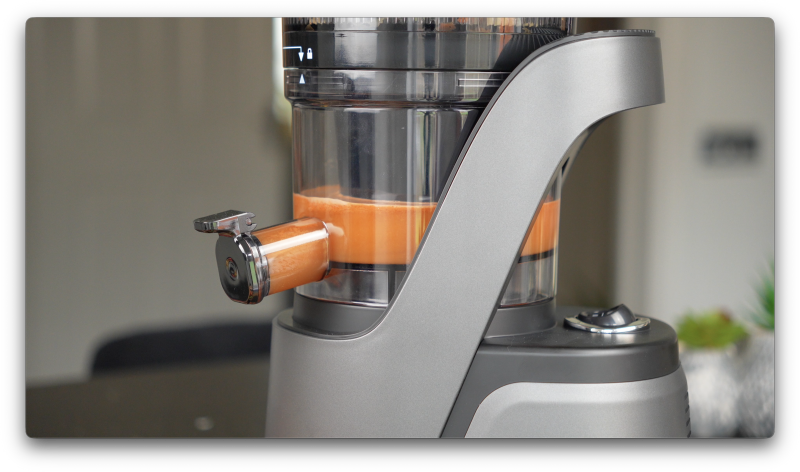
The separate pulp outlet also makes it easy to observe how the machine is processing ingredients.
As the juice flows into one container, the extracted solids are directed into another.
This separation helps keep the process organised and reduces the need to manually strain large quantities of pulp afterwards.
The results were particularly satisfying with everyday combinations of fruit and vegetables.
However, the consistency and quantity of juice naturally depend on the ingredients.
Softer fruit, harder vegetables, and leafy greens all behave differently when compressed.
It’s therefore unrealistic to expect identical results from every recipe.
What About Fibrous Ingredients?
This is one area where a little more attention may be required.
Ingredients such as celery, pineapple, and other stringy vegetables can be more demanding for slow masticating juicers.
Long fibres may accumulate around the pressing mechanism or pulp outlet, potentially affecting how smoothly material moves through the machine.
The C16 includes a reverse function to help deal with these situations.
If ingredients become caught, reversing the auger can help release material and allow normal operation to resume.
For particularly fibrous produce, cutting ingredients into shorter lengths can also help reduce the likelihood of tangled fibres.
This doesn’t make the C16 unsuitable for vegetable juicing, but it does highlight an important distinction.
The large hopper reduces preparation work; it doesn’t eliminate every limitation associated with slow-press extraction.
For most everyday fruit and vegetable combinations, however, the C16 delivers a convenient and satisfying experience.
2. Noise Levels — Surprisingly Quiet for a Juicer
One of the most immediately noticeable characteristics of the C16 is how quietly it operates.
Anyone familiar with traditional centrifugal juicers will know that some can be remarkably loud.
The combination of a high-speed motor, spinning blades, and hard ingredients can produce enough noise to make early-morning juicing rather unpleasant.
The C16 is noticeably different.
Canoly advertises an operating noise level of approximately 35 decibels, which would make it an exceptionally quiet kitchen appliance.
It’s worth treating that figure with some caution, as sound measurements depend on factors such as distance, surroundings, ingredients, and testing conditions.
Nevertheless, the experience during testing supports the broader claim that this is a quiet machine.
The motor produces a relatively subdued operating sound, especially compared with the high-speed juicers I’ve used previously.
You’ll still hear ingredients being crushed, particularly harder vegetables such as carrots.
However, the motor itself remains impressively restrained.
This makes the C16 particularly appealing for anyone who likes preparing fresh juice early in the morning without creating unnecessary noise throughout the house.
It’s one of those advantages that might not seem especially important when comparing specifications, but becomes much more noticeable once you’re using the appliance regularly.
3. Plant-Based Milk — A Genuinely Useful Second Function
The C16 becomes more interesting when you move beyond conventional juicing.
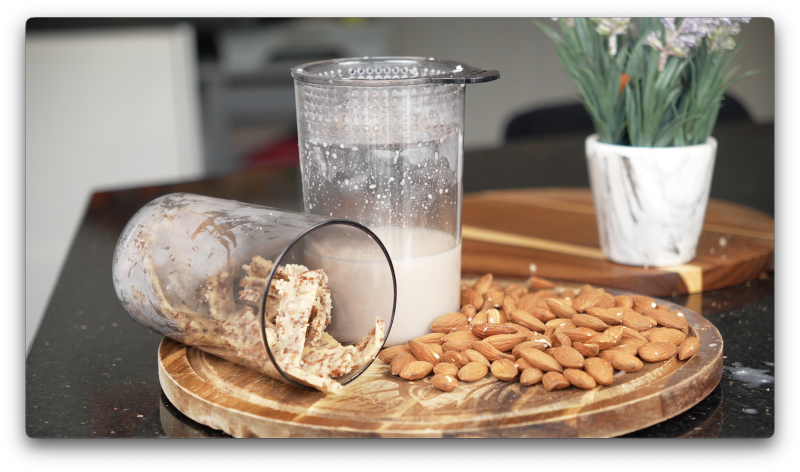
By using the appropriate strainer and preparation method, it can also produce homemade plant-based milk.
This could be a particularly useful feature for anyone who regularly buys almond, cashew, oat, or other dairy-free alternatives.
Rather than purchasing ready-made cartons, the machine allows you to experiment with your own ingredients and control the amount of water used.
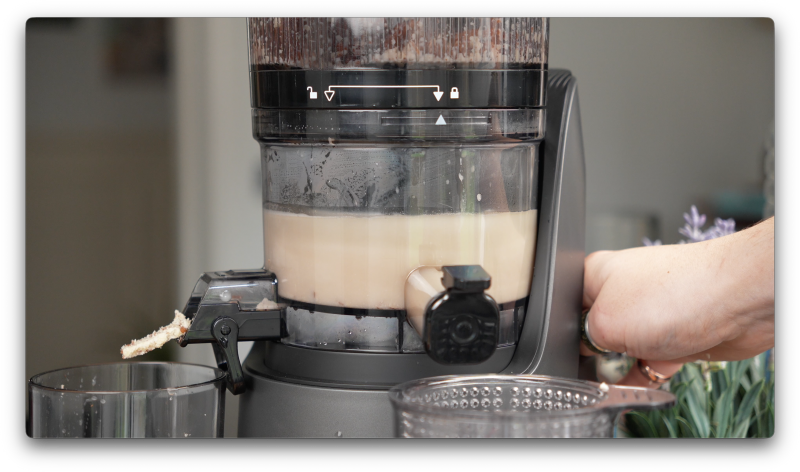
For almond milk, for example, the process involves soaking the almonds beforehand, combining them with water, and allowing the juicer to separate much of the solid material from the liquid.
The result is freshly prepared plant milk without needing a dedicated nut milk machine.
How Does the Milk Turn Out?
The process is satisfying to watch, and the ability to prepare plant milk using the same appliance as your morning juice is genuinely convenient.
However, there are a few practical considerations.
The consistency depends heavily on the ingredients, their preparation, and the ratio of solids to water.
Some recipes will naturally produce a creamier result than others.
And while the C16 separates much of the solid material, the finished milk may still contain fine sediment.
If you’re particularly sensitive to texture or prefer an exceptionally smooth result, passing the liquid through a fine strainer or nut milk bag afterwards may still be worthwhile.
It’s also important to remember that homemade plant milk isn’t necessarily nutritionally equivalent to shop-bought alternatives.
Many commercial plant milks are fortified with calcium, vitamin B12, or other nutrients, whereas homemade versions won’t contain those additions unless you include them separately.
Homemade milk may also separate during storage and generally requires more careful handling because it doesn’t contain the stabilisers or undergo the same processing as many packaged alternatives.
These aren’t necessarily reasons to avoid making your own.
They’re simply useful things to understand before expecting a homemade recipe to behave exactly like something purchased from a supermarket.
Does It Replace a Blender?
Not entirely.
A conventional blender remains more versatile for smoothies, sauces, soups, and recipes where you want to retain all the blended ingredients.
The C16 is designed primarily around pressing and separating ingredients.
However, for people who regularly make fresh juice and plant-based milk, combining those functions into one machine is genuinely practical.
It means one less specialist appliance to purchase, store, and maintain.
And unlike some additional features that feel included primarily for marketing purposes, plant milk preparation fits naturally with the C16’s extraction system.
4. Sorbet Making — More Useful Than You Might Expect
The third function is arguably the most enjoyable.
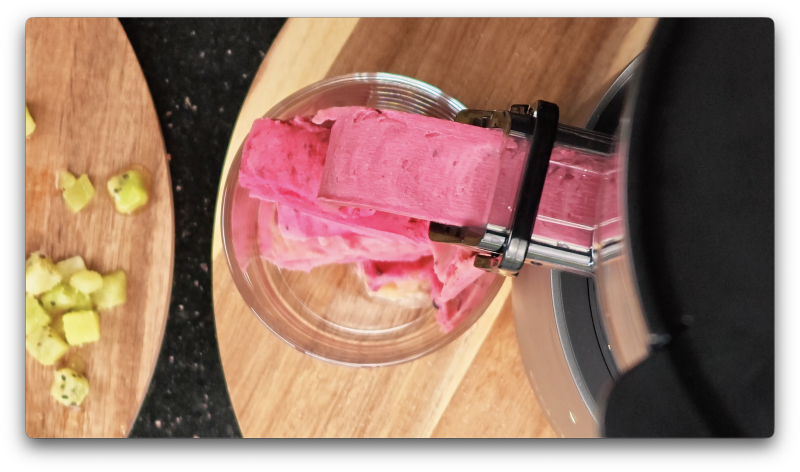
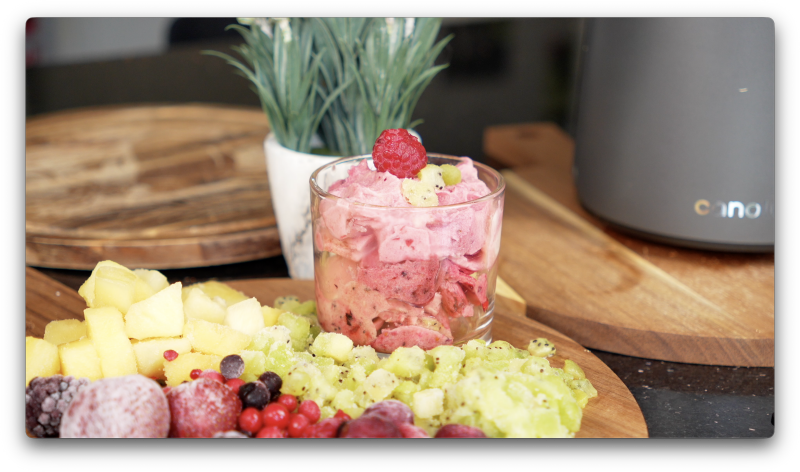
By swapping to the dedicated sorbet strainer, the C16 can process frozen fruit into a thick, dessert-like mixture.
Instead of extracting juice and separating dry pulp, the machine works the frozen ingredients into a soft frozen consistency.
It’s a straightforward concept, but one that opens up some interesting possibilities.
Frozen mango, berries, strawberries, and banana are all suitable starting points for experimenting with homemade frozen fruit desserts, provided they’re prepared according to the manufacturer’s instructions.
You can also combine different fruits to create your own flavours.
One of the main attractions is the simplicity.
Rather than relying on a long list of ingredients, you can create a frozen dessert using fruit alone.
There’s no need to add refined sugar if the natural sweetness of the fruit is sufficient for your taste.
What Is the Texture Like?
It’s important to manage expectations here.
The finished result isn’t necessarily identical to commercially churned sorbet or ice cream.
Traditional frozen desserts often use specific ingredient ratios, controlled freezing, and churning to create their characteristic textures.
The C16 instead processes frozen fruit directly into a soft, thick mixture.
That means the consistency will depend on the fruit, its temperature, and how it has been prepared.
Nevertheless, the results are appealing for such a simple process.
It’s particularly useful when you want a quick frozen dessert without using a separate ice cream maker.
And because the machine already has the necessary motor and pressing mechanism, changing functions only requires switching the appropriate components.
Initially, sorbet making might sound like a novelty feature.
But after trying it, it’s easy to appreciate why someone might use it regularly, especially during warmer months.
The key consideration is whether frozen fruit desserts are something you’ll genuinely make.
If they are, the additional function adds meaningful value.
If not, it’s unlikely to justify spending significantly more than you would on a conventional juicer.
Cleaning & Maintenance — Has Canoly Solved the Biggest Juicer Problem?
Cleaning is arguably one of the most important aspects of owning a juicer.
A machine can produce excellent results, but if dismantling and washing it becomes a frustrating experience, the temptation to use it regularly quickly disappears.
Canoly has clearly considered this with the C16.
The machine uses a relatively straightforward removable assembly, allowing the hopper, pressing mechanism, and filters to be separated for cleaning.
The pulp outlet also features a detachable section designed to make trapped material easier to access.
This is particularly useful because pulp outlets are often among the more awkward areas to clean on slow juicers.
Fibrous ingredients can become caught around small openings, making them difficult to rinse thoroughly.
Being able to open the outlet provides better access to these areas.
fore washing, particularly after processing stringy vegetables.
Is It Actually Easy to Clean?
The C16 is relatively straightforward to dismantle, and the removable pulp outlet is a thoughtful addition.
However, there’s an important distinction between being easy to clean and requiring no cleaning.
You still have several components to remove.
The filter needs attention, particularly when fine pulp becomes trapped in its openings.
The auger and pressing chamber also need cleaning after use.
And when switching between juice, plant milk, and sorbet, you’ll naturally need to wash the relevant components to avoid transferring flavours or residue.
The C16 therefore doesn’t completely eliminate the cleaning process.
What it does offer is a more manageable approach, especially if you have access to a dishwasher.
For anyone who has previously abandoned a juicer because cleaning became too frustrating, the C16 is worth considering — but don’t expect maintenance to disappear entirely.
Real-World Experience — The Large Hopper Makes the Biggest Difference
After using the C16 across its three main functions, the feature that stands out most isn’t necessarily its versatility.
It’s the large hopper.
The ability to prepare a batch of ingredients, place them inside one generous container, and allow the machine to gradually work through everything changes the overall experience.
With smaller juicers, the preparation and feeding process can feel like a constant series of small tasks.
Cut the fruit.
Feed a few pieces.
Wait.
Add more.
Repeat until everything has been processed.
The C16 reduces much of that repetition.
You can prepare your ingredients in advance, load a substantial quantity, and let the machine handle more of the process.
It’s not completely automatic in every situation, but it requires considerably less interaction.
That makes it particularly appealing for preparing juice for more than one person or making several servings in a single session.
A Better Fit for Regular Juicing
This convenience matters because kitchen appliances only deliver value when they’re actually used.
A juicer with an impressive extraction percentage isn’t especially useful if the preparation and cleaning discourage you from switching it on.
The C16 addresses part of that problem by reducing the amount of chopping and constant feeding required.
Its quiet operation also makes it easier to incorporate into a morning routine.
And the relatively compact base means it doesn’t occupy as much horizontal worktop space as the large hopper might initially suggest.
However, the height and weight are worth remembering.
If you have limited cupboard clearance or very little available storage, finding a permanent home for the machine could be more challenging.
There’s also the question of how frequently you’ll use the additional functions.
For someone who regularly makes juice, almond milk, and frozen fruit desserts, the C16 offers a sensible combination.
For someone who only wants the occasional glass of apple juice, the extra versatility may be unnecessary.
Continuous Operation and Motor Protection
One specification worth highlighting is the recommended operating duration.
Canoly states that the C16 can operate continuously for up to approximately 30 minutes.
After extended operation, its overheating protection system may activate.
The manufacturer recommends allowing the machine to cool for around 30 minutes before restarting if this occurs.
For typical household batches, this is unlikely to be a major inconvenience.
However, it’s worth considering if you’re planning to process very large quantities of produce in one session.
The large hopper makes batch preparation convenient, but it doesn’t mean the machine is intended for unlimited continuous operation.
Pros — What We Like About the Canoly C16
- Excellent 2.6-litre hopper: The large capacity significantly reduces the need for constant feeding.
- Six-inch feed opening: Accommodates larger ingredients and reduces chopping.
- Three genuinely useful functions: Juice, plant-based milk, and sorbet can all be prepared using the same appliance.
- Impressively quiet operation: The subdued motor makes it particularly suitable for morning use.
- Good everyday juice quality: Produces enjoyable, freshly pressed fruit and vegetable juices.
- Simple controls: Straightforward operation without unnecessary programmes or complicated settings.
- Reverse function: Helps when ingredients become caught around the auger.
- Dishwasher-safe removable components: Makes routine maintenance more convenient.
- Detachable pulp outlet: Improves access to an area where fibrous material can accumulate.
- Integrated carrying handle: Useful when moving or storing the appliance.
- Modern appearance: Available in Pearl White and Space Grey.
- Versatile food preparation: Particularly appealing for households that regularly prepare juice and dairy-free alternatives.
Cons — What Could Be Better?
- Fairly tall design: At approximately 44cm high, it may not fit beneath some kitchen cupboards.
- Still requires cleaning: Dishwasher compatibility helps, but several components must be dismantled and washed.
- Fibrous ingredients can need extra attention: Celery, pineapple, and similarly stringy produce may occasionally require intervention.
- Additional accessories need storage: The strainers and collection containers take up extra cupboard space.
- Plant milk texture varies: Some recipes may benefit from additional fine straining.
- Sorbet texture differs from traditional frozen desserts: Results depend on the fruit and preparation method.
- Manufacturer extraction figures need context: The advertised 99.6% juice yield shouldn’t be expected from every ingredient.
- Limited continuous operating time: Extended sessions may require a cooling period.
- Potentially unnecessary for occasional users: Those who only want basic juicing may be better served by a simpler machine.
Who Is the Canoly C16 For?
The Canoly C16 is best suited to people who want to make fresh juice regularly without spending excessive time preparing ingredients.
Its large hopper, quiet motor, and straightforward operation make it particularly appealing for everyday home use.
Ideal for Regular Juice Drinkers
If you enjoy preparing fresh fruit and vegetable juices several times a week, the reduced chopping and feeding requirements could make a meaningful difference.
The C16 is particularly well suited to people who find traditional narrow-feed juicers unnecessarily time-consuming.
Great for Families and Larger Batches
The generous hopper makes preparing multiple servings more convenient.
Rather than repeatedly stopping to add ingredients, you can load a larger quantity and allow the machine to process it gradually.
It’s a practical advantage for households where more than one person enjoys fresh juice.
Useful for Plant-Based Diets
Anyone regularly preparing homemade almond, cashew, or other plant-based milk may appreciate the additional functionality.
Being able to use the same machine for juice and plant milk reduces the need for separate specialist appliances.
However, buyers who prioritise exceptionally smooth plant milk should remember that additional straining may still be necessary.
Appealing for Homemade Frozen Desserts
The sorbet function adds another dimension.
For families or individuals who enjoy experimenting with frozen fruit desserts, it provides a simple way to create refreshing treats without needing a dedicated ice cream maker.
Who Should Consider Something Else?
The C16 may be less suitable if you have very limited kitchen storage, only make juice occasionally, or have no interest in preparing plant milk or sorbet.
A smaller, less expensive juicer could offer better value in those circumstances.
Similarly, anyone who primarily wants smoothies, soups, or blended sauces would probably benefit more from a conventional blender.
And if your daily routine involves processing exceptionally large quantities of fibrous vegetables, it’s worth considering whether a machine specifically suited to that workload would be a better investment.
Ultimately, the C16’s value depends on how much of its functionality you’ll actually use.
Add comment
Comments