


INTRODUCTION
The HomiQ W11 is built around a simple but genuinely useful idea: outdoor security without putting a camera outdoors.
Most home security cameras ask you to compromise somewhere. You either drill into brickwork, run power cables, rely on batteries, expose the camera to weather, or place it somewhere obvious enough that it could be stolen. A window camera takes a different route. It stays safely inside, presses up against the glass, and looks out over your driveway, front door, balcony, garden, camper van pitch or apartment entrance.
That is the appeal of the HomiQ W11. It is pitched as a cordless, magnetic, solar-assisted window camera with 4MP video, full-colour low-light recording, through-glass radar detection and a non-permanent mounting system. On paper, that makes it particularly interesting for renters, flats, student accommodation, shared buildings, caravans and anyone who wants simple outdoor monitoring without damaging walls or fitting a traditional CCTV system.
The big question is whether it feels like a practical security product or just a clever concept. Based on the supplied testing experience, the answer is mostly positive — but with a few important realities buyers should understand before backing it.
QUICK SUMMARY
The HomiQ W11 is a smart, discreet and surprisingly capable window-mounted security camera that solves several common problems with outdoor monitoring. It avoids drilling, keeps the camera indoors, reduces theft risk, and uses radar rather than relying solely on traditional through-glass motion detection.
Image quality is one of its strongest areas. The 4MP footage looks crisp through glass, glare control appears genuinely impressive, and the full-colour night performance is better than expected when there is at least some ambient light available. The magnetic mounting system also makes installation refreshingly simple.
However, this is still a window camera, which means placement matters enormously. Glass type, coatings, tint, reflections, available light, window angle, Wi-Fi strength and solar panel positioning will all affect the final experience. It is also launching through Kickstarter, so buyers should treat pricing, delivery timelines and final retail availability with normal crowdfunding caution.
At the early-bird price of $139.99 mentioned in the source material, it looks like a compelling option for the right user. At the claimed future retail price of $229.99, it will need to compete more directly with established smart security cameras and mature ecosystems.

WHAT’S IN THE BOX
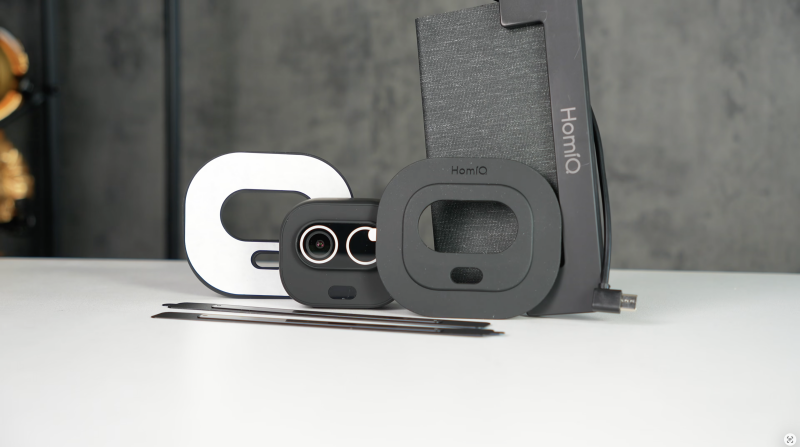
Based on the supplied transcript, the package includes:
- HomiQ W11 window camera
- Mounting hardware
- Magnetic mounting system
- 3M adhesive mounting pads
- Solar panel
- Basic setup materials or instructions
The supplied source does not clearly confirm the full retail box contents, such as the charging cable type, spare adhesive pads, screws, power adapter, documentation details or whether any microSD card is included. HomiQ’s related listings indicate that local microSD storage may be supported on some window camera models, but storage accessories are typically sold separately, so buyers should check the final Kickstarter reward details before backing.
DESIGN & BUILD QUALITY
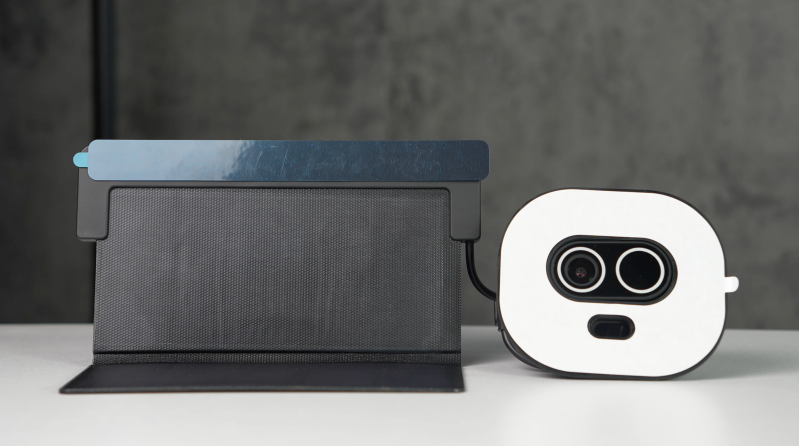
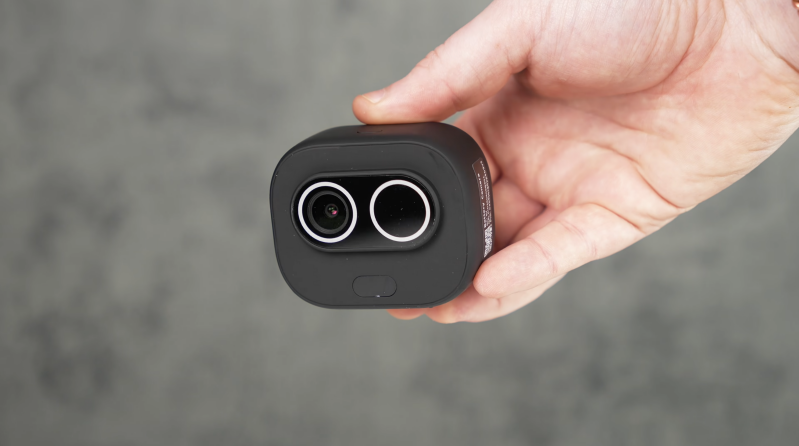
The HomiQ W11 has been designed to avoid the industrial look of a traditional outdoor security camera. From the testing notes, it comes across as compact, tidy and clearly intended for indoor window placement rather than exposed exterior mounting.
That matters more than it might sound. A window camera needs to blend into the home. It cannot look like a bulky CCTV box stuck to the inside of your front window, especially if it is being used in a flat, shared hallway-facing room or living space. The W11 appears to strike a sensible balance: visible enough to feel like a security device, but not so aggressive that it dominates the room.
The magnetic mounting system is one of the most important design decisions. Instead of drilling into a wall, the camera uses magnets and 3M adhesive to sit against the glass. For renters, that is a major advantage. It also makes repositioning much easier during setup, which is vital because even small changes in angle and distance from the glass can affect glare, reflections and field of view.
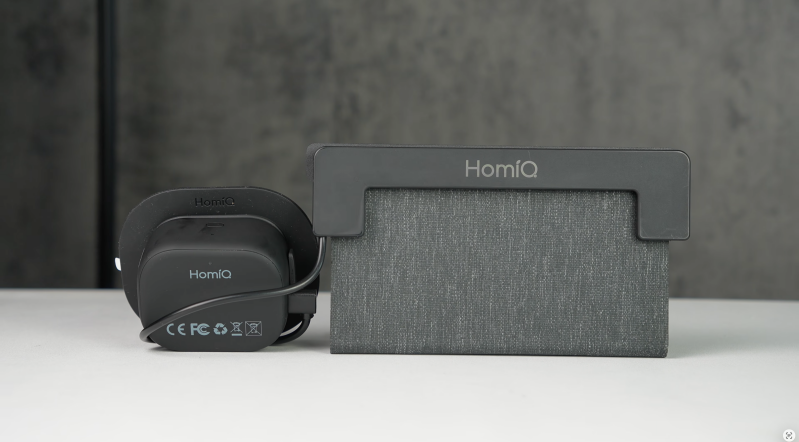
The solar panel is another standout part of the design. The transcript describes it as a 4W panel, which ties into HomiQ’s broader “infinite power” style claim. That phrase should be treated carefully, because solar performance always depends on sunlight exposure, placement, climate, season and camera activity. Still, the inclusion of a dedicated solar panel makes the W11 more practical than many purely battery-powered indoor-to-outdoor camera setups.
The main design limitation is also obvious: the camera is physically tied to your window position. You do not get the same freedom as a wall-mounted outdoor camera that can be angled exactly where you want it. If your window faces the wrong direction, has thick frames, patterned glass, heavy tinting, privacy film or poor sunlight access, the W11 may not perform at its best.
SETUP & FIRST IMPRESSIONS
Setup appears to be one of the W11’s strongest qualities. According to the testing experience, the process is straightforward: add the camera in the app, connect it to Wi-Fi, mount it to the window, and then adjust preferences.
That is exactly what this type of product needs. A camera aimed at renters, apartment users and everyday households cannot feel like a technical installation project. The point is convenience, and the W11 seems to deliver that well.
The camera is advertised with Wi-Fi 6 support, and the transcript also mentions an optional 4G version depending on model. That is useful because the target audience may include people using the camera in less conventional settings, such as garages, outbuildings, caravans or camper vans where normal home Wi-Fi may not always reach reliably. HomiQ’s app ecosystem is available on Android and iOS, with the Google Play listing describing live video streaming, two-way talk, event snapshots, AI detection, cloud backup and smart sharing features.
The first impression is that the W11 feels more polished than a cheap generic window camera. The supplied script specifically notes that it does not feel like a flimsy plastic gadget, and that it looks like something designed for a home rather than a commercial security installation.
The only setup warning is that you should not rush placement. The camera needs to sit as flush as possible against the glass. Any gap between the lens and the window can increase reflections, particularly at night when indoor lights are on.
FEATURES & PERFORMANCE
4MP Video Quality
The W11 records at 4MP, which sits above standard 1080p and gives the footage more usable detail. In practical terms, that means people, clothing, movement and general situations are easier to read. Security footage is only useful if you can actually understand what happened, and the jump from softer Full HD footage to 4MP can make a meaningful difference.
In daylight, the source footage is described as crisp and clean. The camera appears to capture enough detail to make playback useful rather than simply showing vague shapes moving past the window. That is particularly important for front doors, driveways, garden gates and shared entrances, where you may need to see whether a person approached the property, delivered a parcel, looked through a car window or simply walked past.
Glare and Reflection Control
This is arguably the W11’s biggest achievement. Traditional cameras often struggle badly behind glass because infrared night vision reflects back into the lens. That can create a washed-out image, bright glare, ghosting or a completely unusable night view.
The HomiQ W11 attempts to avoid that problem by using full-colour low-light imaging rather than relying on harsh infrared LEDs. HomiQ’s campaign and social material reference ultra-low-light colour night vision and mmWave radar through glass, while the supplied transcript specifically mentions an F1.0 aperture and AI backlit technology.
In real use, the reviewer found the anti-glare performance genuinely impressive. Even when used through a house window and tested on a car window — a much more reflective and challenging environment — the image remained cleaner than expected. The transcript repeatedly notes that reflections were not obvious in the footage and that, at times, you would not immediately realise the camera was filming through glass.
That is a major compliment for this category. Window cameras live or die by their ability to deal with reflections, and the W11 appears to handle that problem better than many basic indoor cameras pointed outside.

Night Vision and Low-Light Footage
The W11’s full-colour night performance sounds strong, but it needs context. The transcript says the camera performs best when there is some ambient light available — for example, street lighting, porch lighting, nearby building light or general outdoor illumination.
That is realistic. Full-colour night footage usually needs some light to work well. HomiQ’s marketing references ultra-low-light colour visibility, but buyers should be careful with any claim around extremely low lux figures. In real homes, performance will depend heavily on the scene outside the window.
The promising part is that the W11 does not appear to suffer from the obvious IR bounce-back that ruins many glass-facing cameras. Even with indoor lighting on, the test footage reportedly avoided the strong reflections the reviewer expected. That makes it much more practical for evening use in normal homes.
In near-total darkness, however, expectations should be measured. The camera may still produce a colour image, but detail, clarity and motion sharpness will naturally depend on available light and sensor processing.
24GHz Radar Detection
Detection is where the W11 becomes more interesting than a standard indoor camera pointed out of a window.
Most security cameras rely on either PIR detection or pixel-based motion detection. PIR sensors often struggle through glass, while basic motion detection can be triggered by shadows, headlights, trees, rain, reflections and general light changes. HomiQ’s W11 instead claims to use 24GHz mmWave radar detection that can work through glass, with the transcript mentioning detection up to 8 metres and a 120-degree field of view.
In the reviewer’s experience, this made alerts feel less jumpy and more intentional. Rather than constantly reacting to flickering headlights or tree movement, the camera appeared to focus more on actual movement. The option to set human movement detection also helps reduce unwanted alerts.
This is one of the W11’s most important selling points. If the radar system continues to perform reliably over longer-term use, it could solve one of the biggest frustrations with window-based security cameras.
However, this is also an area where buyers need to be realistic. Glass type matters. Thick double glazing, specialised coatings, tinting, textured glass, privacy film and unusual window construction may all affect detection and image performance. The reviewer specifically notes that they cannot promise identical results for every home, and that is the right position to take.

App and Smart Features
HomiQ’s app listings describe features such as live HD video, event snapshots, two-way talk, AI detection, cloud backup and device sharing. The Google Play listing for HomiQ also mentions AI detection for people, vehicles, animals and motion events, while the HomiQ Life app listing describes remote control and family sharing features.
That suggests the W11 is not just a standalone camera, but part of a wider app-based security ecosystem. This is useful for everyday monitoring, but it also raises the usual questions buyers should ask: what features are free, which ones require cloud storage, whether local recording is supported on the exact W11 model, how event history works, and how reliable notifications are over time.
There are some early app review comments online suggesting occasional bugs or usability frustrations in HomiQ’s app ecosystem, so this is an area worth watching as the product moves from campaign to wider user delivery.
Battery and Solar Performance
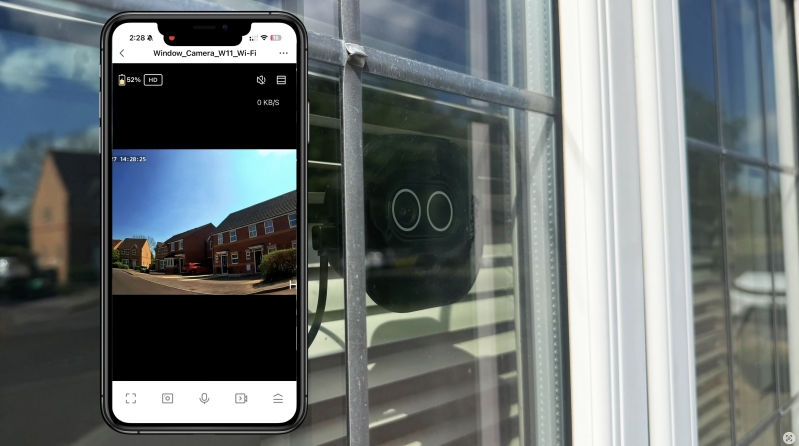
The W11 is listed in the transcript as having a 2,000mAh battery, with a claimed usage figure of up to 60 days. As with all battery cameras, “up to” should be understood as best-case usage rather than a guaranteed everyday result.
Battery life will depend on:
- How often motion is detected
- How often you open the live view
- Recording length and quality settings
- Wi-Fi signal strength
- Temperature
- Notification frequency
- Solar panel exposure
- Whether the camera is in a busy or quiet location
In the supplied testing period, battery life reportedly did not drop over a week, with the solar panel topping it back up effectively. That is encouraging, especially because the camera stays indoors and does not need to be removed from an exterior wall for charging.
UK buyers should be slightly more cautious. Solar panels can still help in Britain, but winter light, shaded windows, north-facing rooms, overhangs, trees and cloudy weather can reduce effectiveness. The W11’s solar system should be seen as a way to reduce charging maintenance rather than a guaranteed never-charge-again solution for every home.
The fact that the solar panel can be unplugged and the unit manually charged is important. That gives the camera a fallback option if the solar placement is not ideal.

REAL-WORLD EXPERIENCE
The HomiQ W11 makes the most sense when used in a realistic home window setup. Placed near a front door window, it can cover the approach to a property without putting any hardware outside. That makes it useful for parcel monitoring, checking who came to the door, watching a driveway, monitoring a shared entrance or keeping an eye on a garden path.
The reviewer also tested it on a car window as a stress test. That is useful because car glass introduces reflections, glare and awkward angles. The W11 performed better than expected in that scenario, but it should not really be considered a dedicated car security product. The solar panel, mounting arrangement and general use case make more sense for homes, caravans, camper vans or static setups rather than everyday car surveillance.
For a camper van or caravan, however, the concept becomes interesting. A cordless window-mounted camera with optional solar support and potential 4G connectivity could be genuinely useful for monitoring outside without drilling into the vehicle body. Again, mounting security, mobile signal, charging and privacy rules would all need to be considered, but the use case is credible.
In day-to-day home use, the W11’s biggest strength is convenience. It removes a lot of friction from security camera ownership. There is no ladder, no exterior drilling, no exposed device, no weatherproofing anxiety and no obvious camera for someone to grab. The camera simply sits inside and watches through the glass.
The trade-off is control. You are limited by the window’s position. If your window is too high, too low, too reflective, too shaded or facing the wrong angle, the camera cannot magically fix that. It is clever, but it is not a replacement for every outdoor camera setup.
PROS
- Clever indoor window-mounted design reduces theft and weather exposure
- No drilling required, making it ideal for renters and flats
- Magnetic mounting system makes placement and adjustment simple
- 4MP image quality provides more detail than basic 1080p cameras
- Strong glare and reflection control based on the supplied test experience
- Full-colour night footage performs well when ambient light is available
- Radar detection through glass is a genuinely useful feature
- Human detection option helps reduce false alerts
- Solar panel reduces the need for manual charging
- Optional 4G version could suit caravans, outbuildings or locations without reliable Wi-Fi
- Discreet design feels more home-friendly than traditional CCTV equipment
CONS
- Still depends heavily on window placement and glass quality
- Thick, tinted, coated, textured or reflective glass may affect performance
- Field of view is limited by the window’s angle and position
- Solar performance will vary by season, weather and available sunlight
- UK winter conditions may reduce solar reliability
- “Up to 60 days” battery life should be treated as a best-case claim
- Kickstarter availability means normal crowdfunding risks apply
- Final app experience, subscriptions and long-term reliability need more time to judge
- Not ideal as a dedicated car security camera
- Full package contents and final retail details should be checked before backing

WHO IS THIS FOR?
The HomiQ W11 is best suited to people who want outdoor-style monitoring without installing an outdoor camera.
It makes the most sense for renters, apartment owners, people in listed or restricted buildings, students, shared accommodation, elderly users, or anyone who does not want to drill holes, run cables or leave an expensive camera outside. It is also a strong fit for front windows, porch-facing rooms, balcony doors, garden-facing glass and driveway-facing windows.
It could also appeal to caravan and camper van owners who want a removable monitoring solution, especially if the optional 4G version becomes widely available.
It is less suitable for people who need full control over camera angle, professional-grade CCTV coverage, guaranteed night vision in complete darkness, or a camera that can be mounted anywhere outdoors. If your best security angle is not visible from a window, a traditional outdoor camera will still be the better option.
FINAL VERDICT
The HomiQ W11 is one of those products that works because the idea is genuinely practical. Instead of trying to be another generic outdoor security camera, it focuses on a specific problem: how do you monitor outside without mounting anything outside?
For the right home, the answer is compelling. The camera stays indoors, avoids weather, reduces theft risk, installs without drilling, and delivers clean 4MP footage through glass. The anti-glare performance appears particularly strong, and the radar-based motion detection gives it a more serious edge than a basic indoor camera pointed out of a window.
It is not perfect, and buyers should not treat it as magic. Your glass, lighting, window angle and solar placement will all shape the result. The Kickstarter launch also means this is not the same as buying a mature product from a shop shelf with a long history of customer reviews.
But as a concept, the HomiQ W11 is smart. As a tested experience, it appears promising. And for renters or anyone who wants simple, discreet outdoor monitoring without permanent installation, it could be a very useful security upgrade.
At the early-bird price of $139.99 mentioned in the video, it feels like an attractive proposition. At the claimed future retail price of $229.99, the value will depend more heavily on final reliability, app polish, storage options and how well the radar detection performs over months rather than days.
For now, the HomiQ W11 looks like a clever, well-targeted window camera with real everyday appeal — just go in with realistic expectations and make sure your window is suitable before backing.
Watch the full cinematic video review on Gadget Crunch’s YouTube channel.
Add comment
Comments